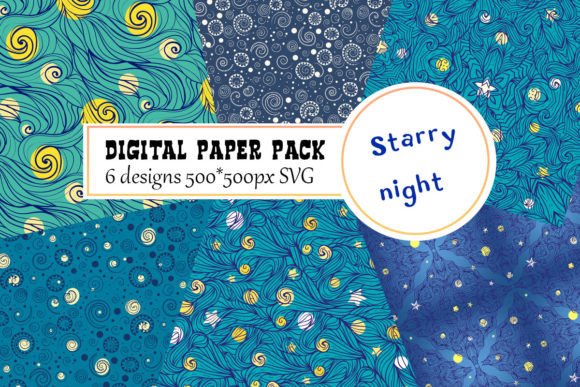
Van Gogh Digital Paper Seamless Patterns
When I first opened the folder for Van Gogh Digital Paper Seamless Patterns, I didn't just see a collection of graphics; I saw potential texture. As someone who spends hours staring at hoops and adjusting stitch density, my initial reaction is always practical: can this translate from a screen to a needle? The answer is a qualified yes, but with specific conditions that every serious embroiderer must understand before cutting fabric.
The mood these patterns evoke is unmistakably artistic and swirling. Inspired by the iconic Starry Night, these designs bring a sense of movement and depth that is rare in standard digital assets. For an embroidery designer, this visual personality suggests a project that demands patience. It isn't a quick fill-stitch logo for a corporate polo; it belongs on items where the customer wants to feel a connection to art history through their clothing or home decor.
From Screen to Stitch: A Real-World Scenario
Let's imagine a real-life scenario. You are preparing inventory for a boutique holiday market. You have a stack of high-quality canvas tote bags and some soft, unbleached aprons sitting on your table. You want to create something unique that stands out against the generic floral prints flooding the craft fairs. This is where Van Gogh Digital Paper Seamless Patterns becomes a game-changer.
I envision taking one of these seamless patterns and using it as a background fill for a large tote bag. The swirling lines mimic the brushstrokes of the original masterpiece. However, unlike a flat print, the embroidery adds physical dimension. When you hold the finished product, the raised satin stitches catch the light differently than a printed design would. Customers running their fingers over the surface will feel the texture, creating a tactile experience that elevates the perceived value of the item. It transforms a simple $15 tote into a piece of wearable art that justifies a higher price point.
But what about a sweatshirt? If you place this design on a heavy cotton fleece, the contrast between the thick fabric and the intricate swirls creates a sophisticated look. It feels less like a souvenir and more like a statement piece. The seamless nature of the patterns allows you to tile them across the back of a hoodie or wrap them around a pillow cover without visible seams, creating an immersive visual field that draws the eye in.
Where to Use (and Where to Pause)
While the artistic merit is clear, a professional designer knows that beauty does not always equal manufacturability. There are specific scenarios where Van Gogh Digital Paper Seamless Patterns requires careful consideration to avoid a failed project.
First, consider the hoop size. These patterns are described as highly detailed. If you attempt to stitch this entire pattern inside a small 4x4 inch hoop, you risk losing the delicate definition of the swirls. The machine might struggle to distinguish between adjacent lines, leading to a muddy, indistinct mess. For best results, this design needs ample space, likely requiring a larger hoop or a strategic crop that focuses on the most impactful section of the pattern.
Fabric choice is equally critical. Stretchy fabrics like jersey or thin synthetics are risky. The tension required to pull the thread tight enough to show off the details can distort the fabric, causing puckering that ruins the illusion of the painting. Similarly, textured fabrics like terry cloth or bouclé can hide the fine details of the pattern. The stitching simply disappears into the loops of the material. Dark fabrics present another challenge; if the thread colors used do not have sufficient contrast against the dark background, the design will vanish into the night, much like the stars in the original artwork.
Be especially cautious with curved surfaces like baseball caps. While possible, the distortion inherent in cap embroidery can warp the circular flow of the Van Gogh-inspired swirls. Unless you are an expert in digitizing for curved surfaces, the result may look stretched and unnatural. Furthermore, for products that require frequent washing, such as kitchen towels or children's clothes, ensure the stitch density is robust. Too loose, and the design frays; too dense, and the fabric becomes stiff and uncomfortable.
Impact on Brand and Product Value
In the world of handmade goods and Etsy shops, visual appeal drives sales. Using Van Gogh Digital Paper Seamless Patterns signals a level of sophistication to your buyers. It shows that you aren't just printing cheap clipart; you are curating designs with artistic intent. This perception builds trust. When a customer sees a well-executed embroidery project that captures the essence of a famous painting, they assume the rest of your work is of similar quality.
This design also enhances giftability. A personalized gift featuring this pattern—perhaps embroidered on a baby onesie or a commemorative patch—carries an emotional weight that generic designs lack. The association with Van Gogh evokes feelings of creativity and passion, making the recipient feel special. For commercial embroidery projects, this asset allows you to offer premium services that differentiate you from competitors offering standard monograms.
However, professionalism relies on execution. If the stitch density is too low, or if the thread colors clash, the artistic vision is lost. Before committing to a full production run, you must test the design thoroughly. Create mockups in black and white to check the balance of the pattern without the distraction of color. Compare how the design looks on both light and dark backgrounds to ensure versatility.
Essential Designer Notes for Execution
Before you load the embroidery file into your machine, there are non-negotiable steps to ensure success. First, always test on scrap fabric. This is the golden rule of embroidery. Check the thread color contrast carefully; sometimes a color that looks perfect on screen appears dull under studio lights. Review the stitch density to ensure the machine can handle the complexity without skipping stitches.
Confirm your hoop size matches the intended output. If the design is meant to be a large background, ensure your machine supports that area or plan to re-hoop strategically. Inspect small details closely; if the pattern contains tiny gaps or fine lines, verify that they will stitch cleanly on your specific machine model. Don't rely solely on the digital preview; physical reality often reveals issues that pixels miss.
Stabilizer selection is paramount for these types of machine embroidery designs. Because the pattern involves continuous lines and potential fills, you need a stabilizer that provides firm support without adding excessive bulk. Consider using a tear-away or cut-away depending on the fabric type to prevent shifting during the stitching process.
Finally, check the licensing terms. If you plan to sell finished products featuring Van Gogh Digital Paper Seamless Patterns, or if you intend to use the digital files in your own design assets, you must confirm the commercial rights. Some licenses allow personal use only, while others permit selling the final stitched product. Understanding these boundaries protects your business from legal complications.
Ultimately, this collection offers a fantastic opportunity to blend classic art with modern craft. Whether you are a hobbyist looking to make a unique personalized gift or a seasoned Etsy seller building a boutique brand, these patterns provide a strong foundation. Just remember that the magic lies not just in the design itself, but in the care and technical skill you apply when bringing it to life. With the right approach, Van Gogh Digital Paper Seamless Patterns can transform ordinary materials into extraordinary heirlooms.